The unit of inquiry, titled “Who We Are”, focused on teaching our BINUSIANS the importance of friendship. Instead of solely emphasizing on academic skills, the unit aimed to help our students develop the ability to build and maintain friendships.
October 18th and 19th, 2023 held great significance for our Early Years 3 class, as we had the privilege of hosting 36 children from PAUD Tunas Mawar. The main objective of this event was to showcase the impressive skills our students have acquired throughout the unit and put into practice what they had learned. Before they arrived, we shared with our BINUSIANS that these children were less fortunate. They came from humble backgrounds and attended an underprivileged school.
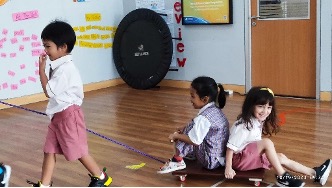
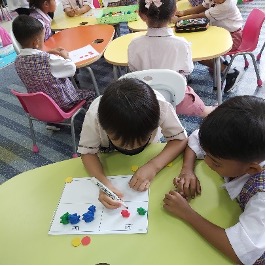
The students from PAUD Tunas Mawar entered our classrooms with excitement visible in their eyes. Our teachers organized various activities to make this playdate a memorable experience for all the students, who had the opportunity to meet and make new friends from a different school for the first time.
Over two days, the children spent a total of two hours together, engaging in learning, playing, and sharing snacks. Witnessing our BINUSIANS embrace an open-minded and caring attitude while transcending boundaries was truly amazing. The atmosphere was filled with a sense of unity and determination as everyone enthusiastically engaged in the task of forging new friendships. When the event concluded, the children from Tunas Mawar were overjoyed to bring home personalized cards, handcrafted bracelets, and other keepsakes as remembrances of the time they spent together with us as a team, persevering towards a common goal.
Last October 2023, enthusiasm and curiosity swept through the Early Years (EY) students during the Changemaker Fest 2023, an annual event hosted by the Primary Years Programme (PYP). This event marked an essential moment in introducing the Sustainable Development Goals (SDGs) to early years, which will empower them to become a changemaker for a better world in the future.
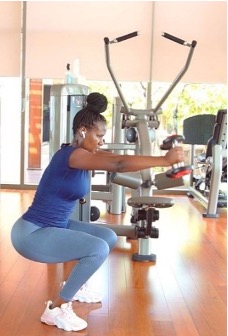
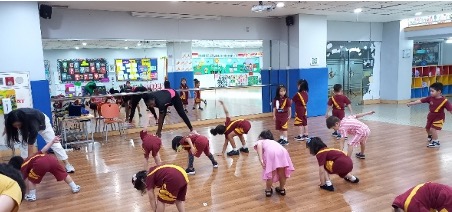
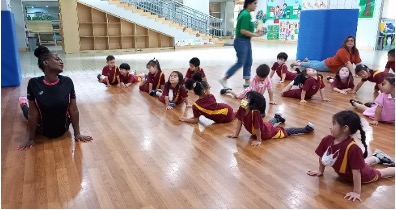
One of the SDGs being discussed in EY classes is SDG number three, “Good Health and Well-Being.” To learn more about this goal, the teachers invited a passionate parent from EY 2A, Ms. Margaret. Her vibrant presence and expertise as a Personal Trainer sparked an unforgettable session on yoga and exercise, which ignited the Early Years students with enthusiasm and joy. She shared her insights on the importance of exercise for a healthy body and happy mind. The students learned that by doing exercise, they can maintain their health and balance their lives.
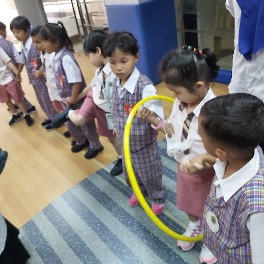
The session started with a gentle warm-up, inviting the children to stretch their bodies. It continued with body coordination exercises such as squats, jumping jacks, crisscross jumping, toe touch twisting, etc. They learned to do exercise movements and built awareness of body coordination. It was challenging for them, but the children enthusiastically embraced the challenge. After the exercises, Ms. Margaret taught the children to play with jumping ropes. She shared her experiences of playful moments with her daughter and brought this cherished activity to the session. With ropes in hand and hearts full of excitement, the children took turns to experience the thrill of jumping over the turning ropes. They had to go inside the turning rope and jump! This activity brought smiles and happiness to the students whenever they leaped successfully. As the session concluded, gratitude filled the air.
It is important to involve family members in the learning process. It can develop positive relationships among teachers, students, and parents. Students can also develop their social skills when interacting with family members by being open-minded and respectful.
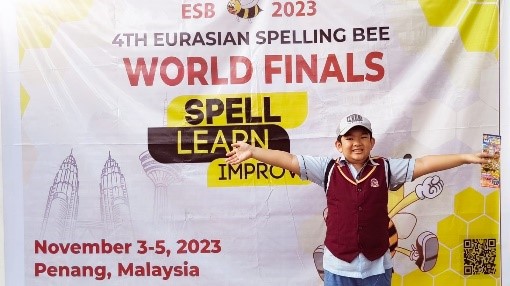
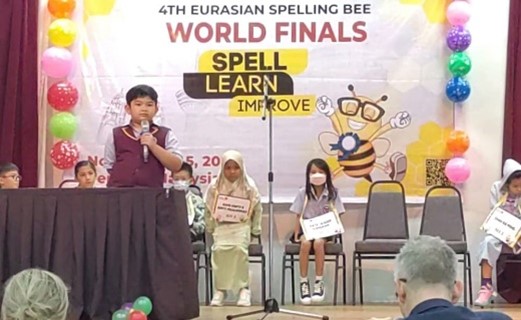
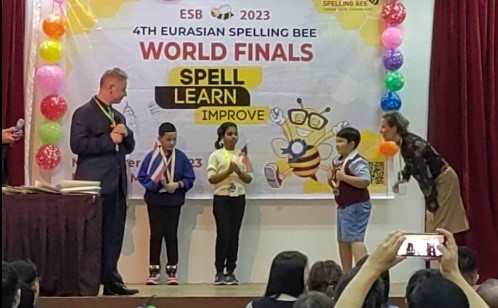
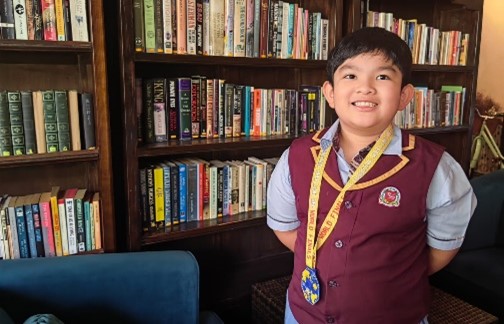
Last November 3 to 5, 2023, I attended a competition in Penang, Malaysia called the Eurasian Spelling Bee. It was the world finals. I was one of the remaining three participants from Indonesia and the only one representing BINUS Schools. I brought home the Merit Award. More than the award is the experience and friends I gained, and of course, the confidence that I didn’t know I had, are the ones I can never forget.
On the first day, we stayed at Hotel Penaga in George Town. It was a vintage-like hotel, and a cozy room! We checked out the places near our hotel and of course, the place for the competition. We also tasted some of their cuisine. Penang is known for its sumptuous foods, and we were not disappointed. We went back to the hotel early so I can still practice spelling some words.
The following day was the day of the competition. I was nervous, and brave at the same time. I knew that something good is about to happen this day! First was the Writing and Listening Test. This was the one where I think I did a decent job at. I got 81 points out of 90. We didn’t get to see what the words are that I did well and the words that I was not able to spell correctly.
After the closed-door writing and listening part of the spelling is the nerve-wracking oral spelling. All of us in the same level, BEE 2, were called on the stage to spell five random words. I spelled, immediately, commitment, friendship, respectful, and carefree. I spelled all the words correctly despite the pressure to do the spelling in front of many people. This is the first time I did oral spelling in front of a crowd! Can you imagine the nervousness I felt that day?
The third day and final reckoning: the announcement of winners and the Awarding Ceremony. I was afraid I wouldn’t make it. When the time finally arrived, I was prepared to know what I got. I got a Merit Award, which was okay, but I think I can do better next time in the next competition. If I can practice more and more over time, I think I can break my silver medal streak and get a gold medal!
Even if the awards and the medal drive the competitors to win the competition, there’s no denying that it is the entire experience of joining the competition, good and bad, are the memories that you will keep and eventually molds you to strive for better things in life and to be a better person along the way.
I hope I can join the next competition, and that there will be more students from BINUS to join next year’s Eurasian Spelling BEE competition!
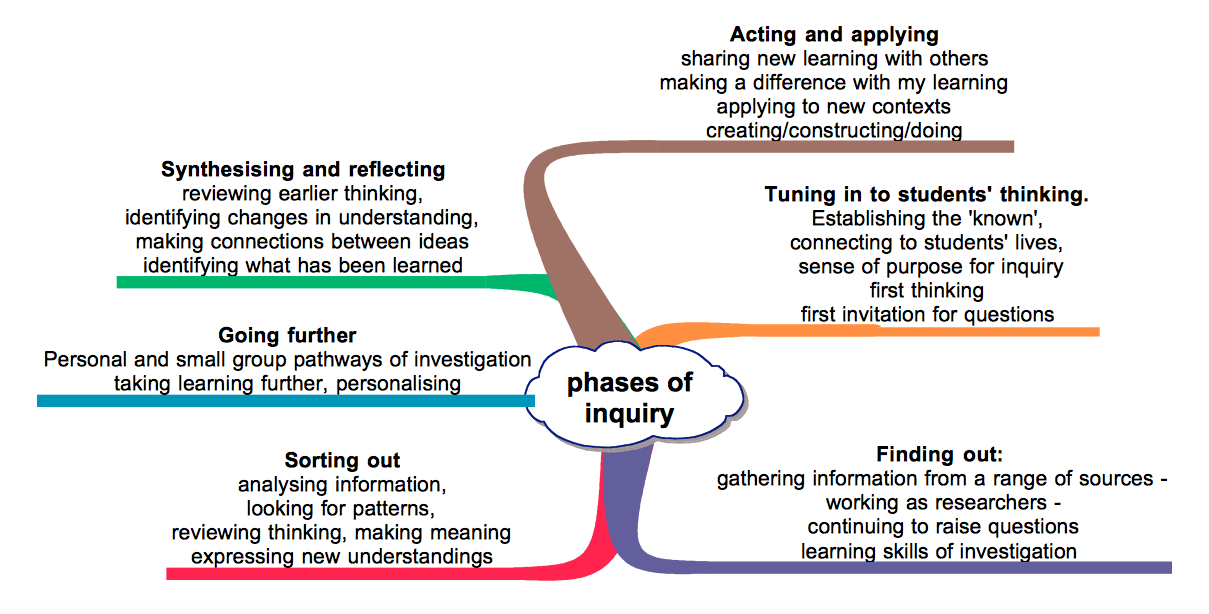
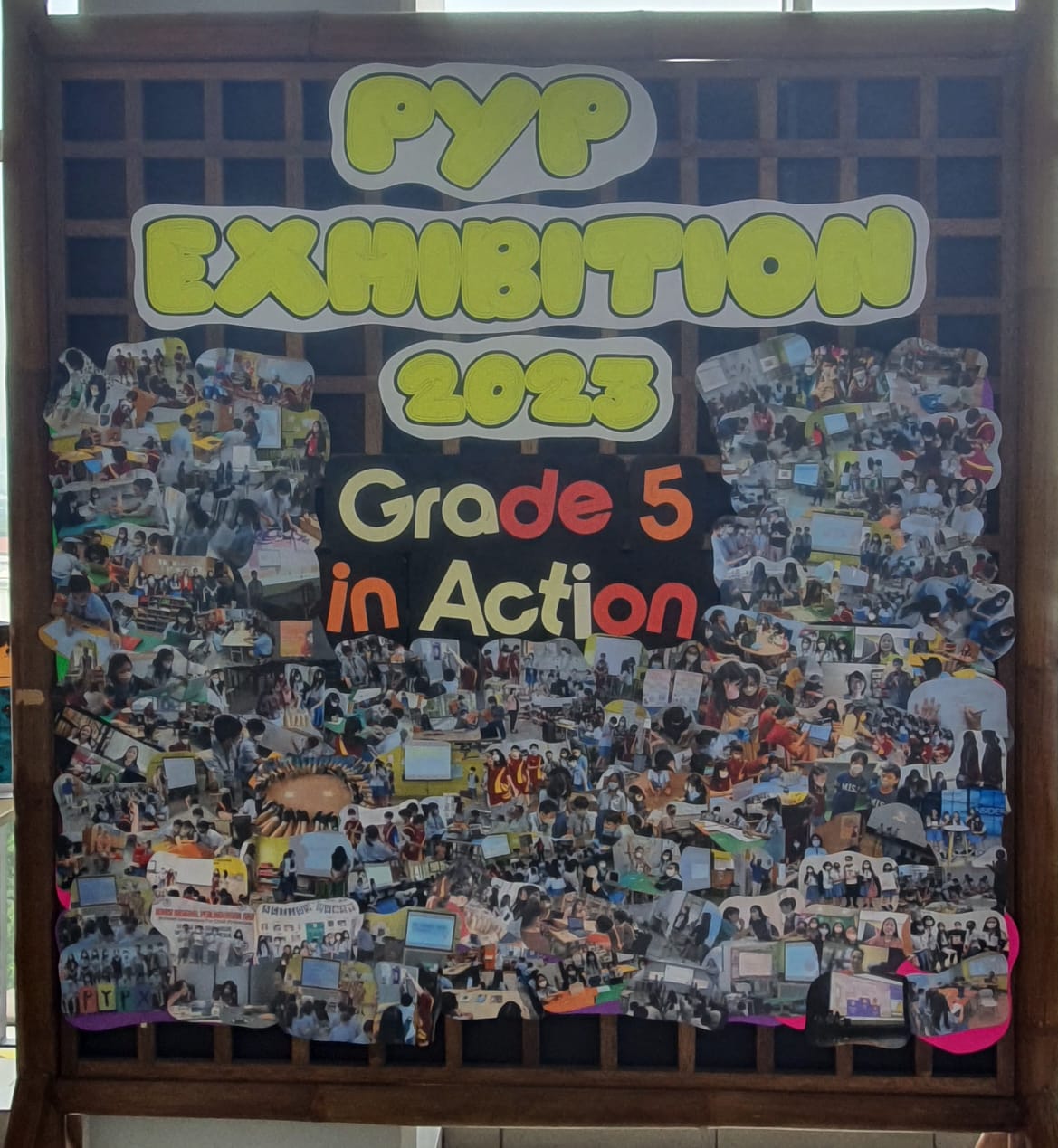
The PYP exhibition is an event where upper-grade IB elementary students (usually in the fifth or sixth grade, depending on the school) come together to showcase their understanding of a chosen issue or topic that they covered. It allows students to share their learning and take action related to the topic they have explored, either individually or collaboratively. In preparation for the PYP exhibition, students need to go through some steps known as “phases of inquiry” such as tuning in, finding out, sorting out, going further, synthesising and reflecting, and acting and applying. These steps from Kath Murdoch’s inquiry model guide them through the process and help them to determine the type of action they will take as a result of their exhibition.
Phases of inquiry by Kath Murdoch
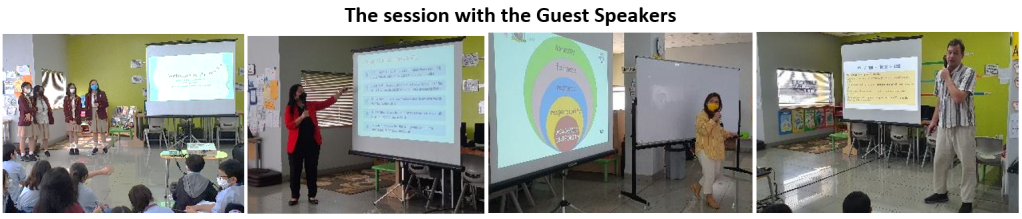
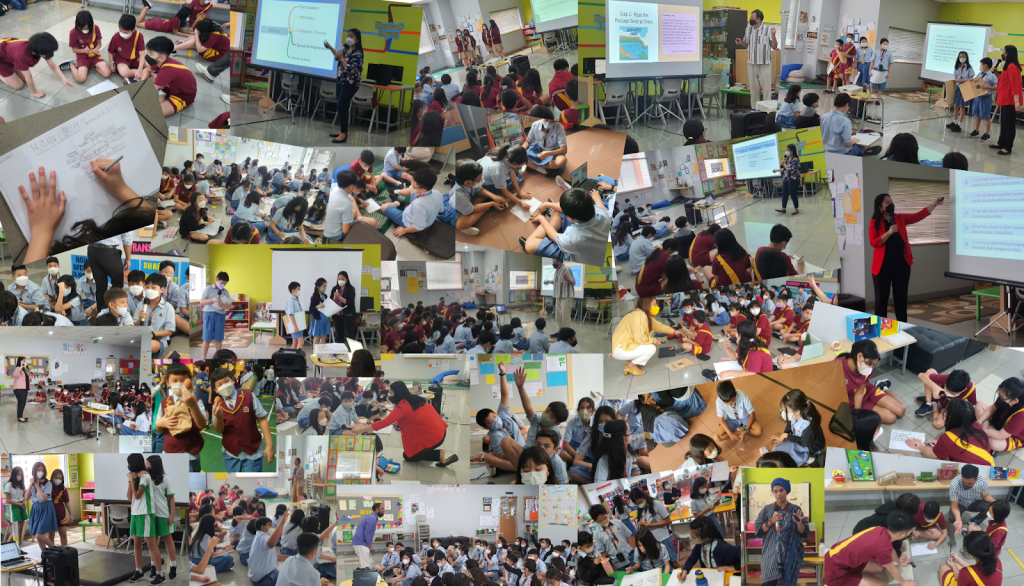
Let’s start with the first step, Tuning in. In this phase, students explored their prior knowledge, asked questions, and identified their interests before they chose their topic and the issues. The students had the opportunity to hear from various guest speakers who will introduce the PYP exhibition and provide more knowledge. At BINUS School Simprug, we usually invite several internal and external guest speakers who are experts in their fields to help the students understand the exhibition process and issues.
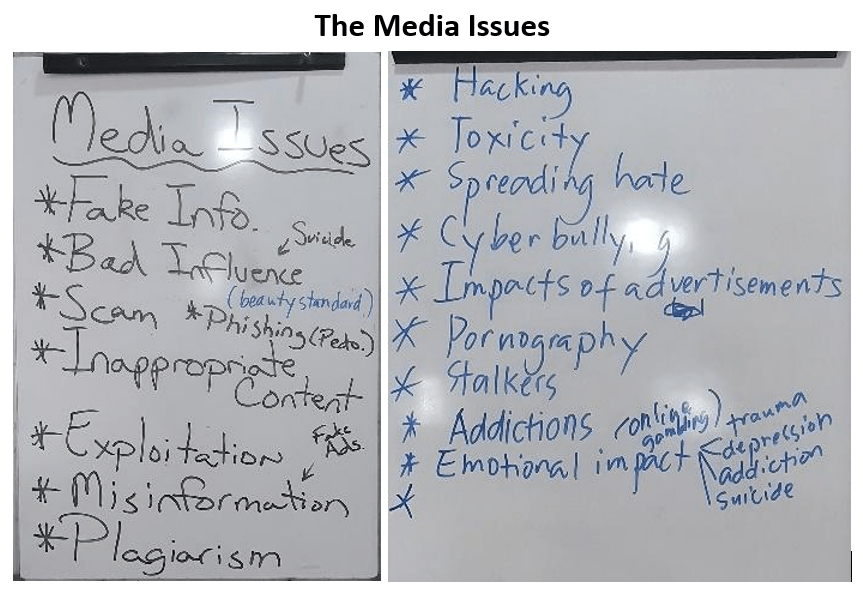
This year’s PYP exhibition unit conducted by our grade 5 students was about media and the guest speakers covered some topics such as creating central ideas, developing lines of inquiry, exploring different approaches to learning, understanding the concept of a human library, discussing how to avoid plagiarism and academic integrity, as well as teaching the students how to effectively paraphrase their research. After they got some insights from the guest speakers, grade 5 students grouped themselves and chose the media issues based on their interests. Former grade 5 students were also invited to share their inspirational experiences during the preparation until the day of the presentation. With all these things, the expectation is for our grade 5 students to gain a deeper understanding of the PYP exhibition and have better preparation.
The next phase is Finding Out. During this phase, the students are expected to gain more specific knowledge from the different types of resources. This year the students chose a specific issue that they wanted to find out more about. We invited some guest speakers such as Ms. Kathy Castro from ASEAN Magazine, Ms. Anya from AFP (Agence France-Presse), Ms. Richel (BINUS School Simprug Early Years and Elementary vice principal & PYP coordinator), Ms. Sapariah from Mongabay news web portal), and many more, who are experts in their respective fields. They covered different topics like how digital media works, journalism, social media addiction, media 101 for the next generation, and how to distinguish between real news and fake news. They also attended and watched online and offline PYP exhibition presentations from other IB schools and had guests from another school who presented their PYP exhibition actions. These activities provided valuable opportunities for the students to ask more questions from the experts, learn from different resources and perspectives, and gain more insights about the project from other schools.
The third phase is Sorting out the information that they gathered from the Finding out stage. They analyzed, interpreted, and made conclusions about the information that they had. They consulted and communicated everything with their parent and teacher mentors – their contributions played a very important role in the PYP exhibition process. They guided what the students should do, gave them support, and helped to find the resource people to be interviewed. The mentors also helped them in setting the goals, providing feedback, and choosing the action that they wanted to do.
Next is the Going Further phase, where the students needed to dig deeper and gather more information from the experts and find additional resources to enrich their references to their chosen topic. During this phase, the students had the opportunity to engage in various activities to gather additional information and enhance their preparation. Some of these activities included: conducting surveys, and interviews, visiting online and offline libraries, watching documentary videos, and company visits. These activities not only enriched their understanding but also allowed them to make connections between their research and real-world applications.
The fifth and sixth phases are ‘synthesising and reflecting’ and ‘acting and applying.’ In these phases, students revised their understanding from ‘what I used to think’ to ‘what I now know.’ They also reflected on their feelings throughout the entire process, starting from the beginning and continuing through each of these phases. During this stage, they were trained to engage in high-level thinking about the topic and identified the actions they would take and how to implement them. They asked themselves some questions such as ‘what can we do with this?’, ‘what can I do now?’, ‘how can I/we use this?’, and ‘is there an important action that they can take to support their final result?’ These phases were integrated throughout the unit, and explicit connections were articulated. The actions that came out also were either collective or personal, depending on their own choice.
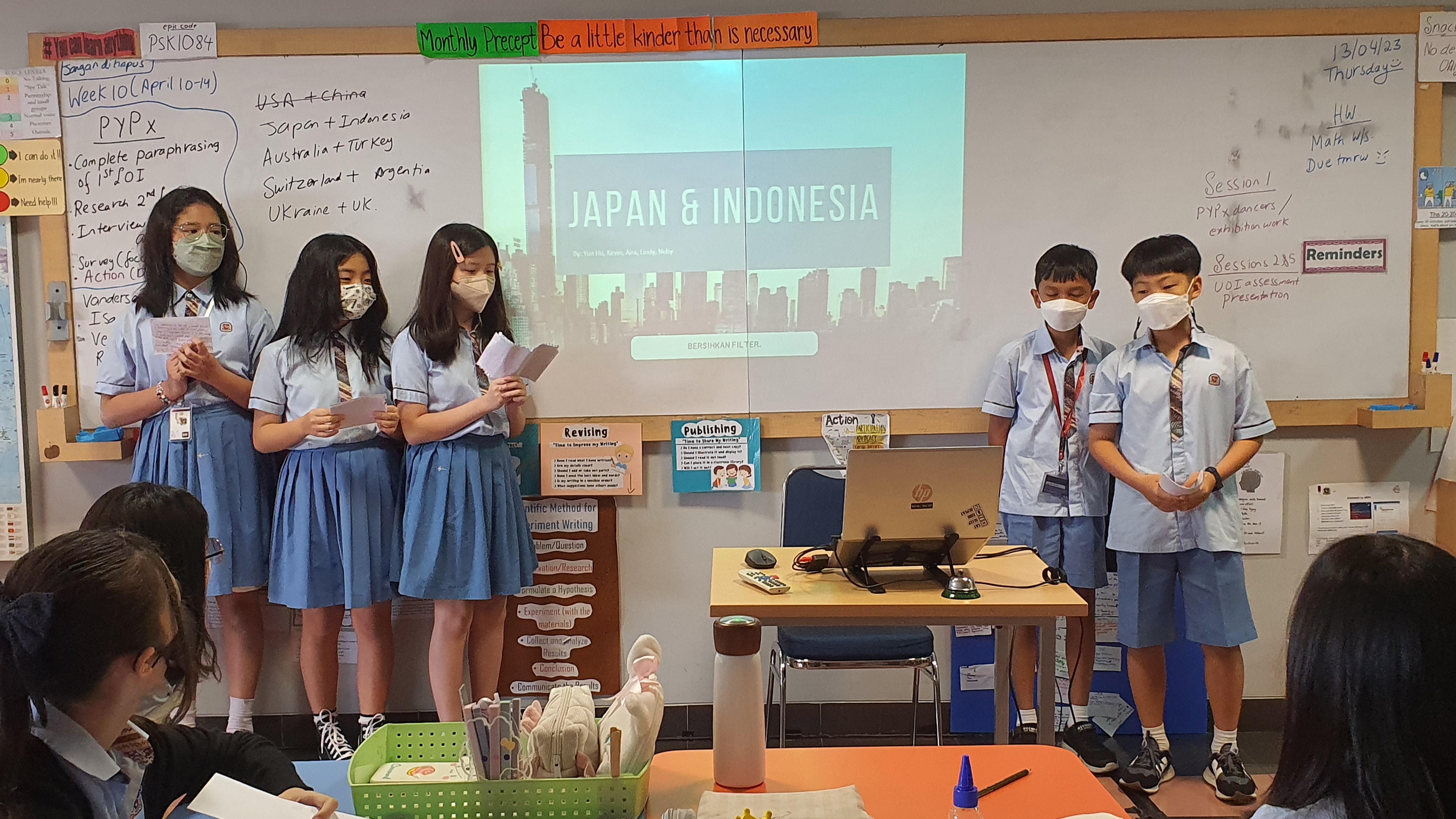
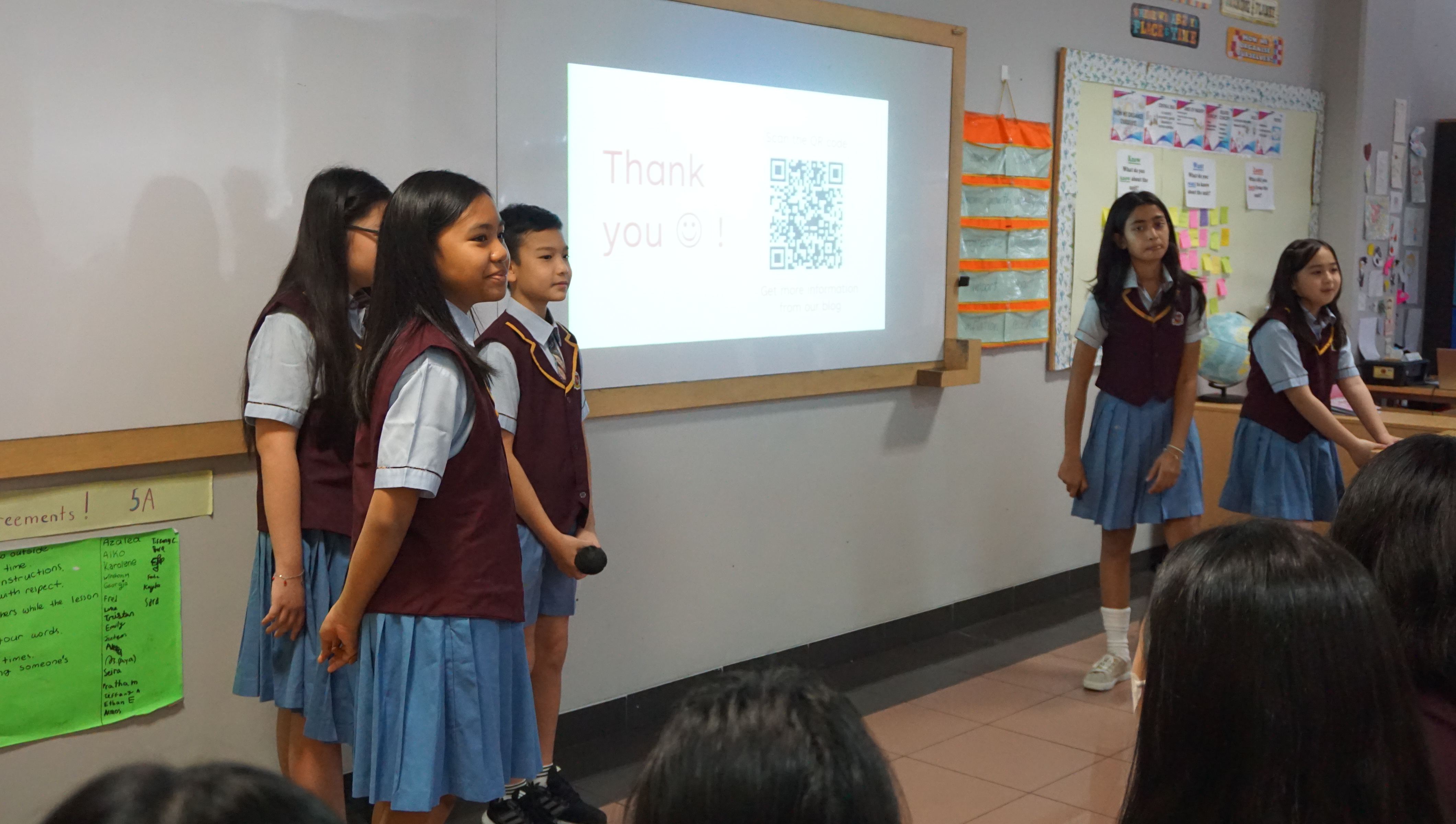
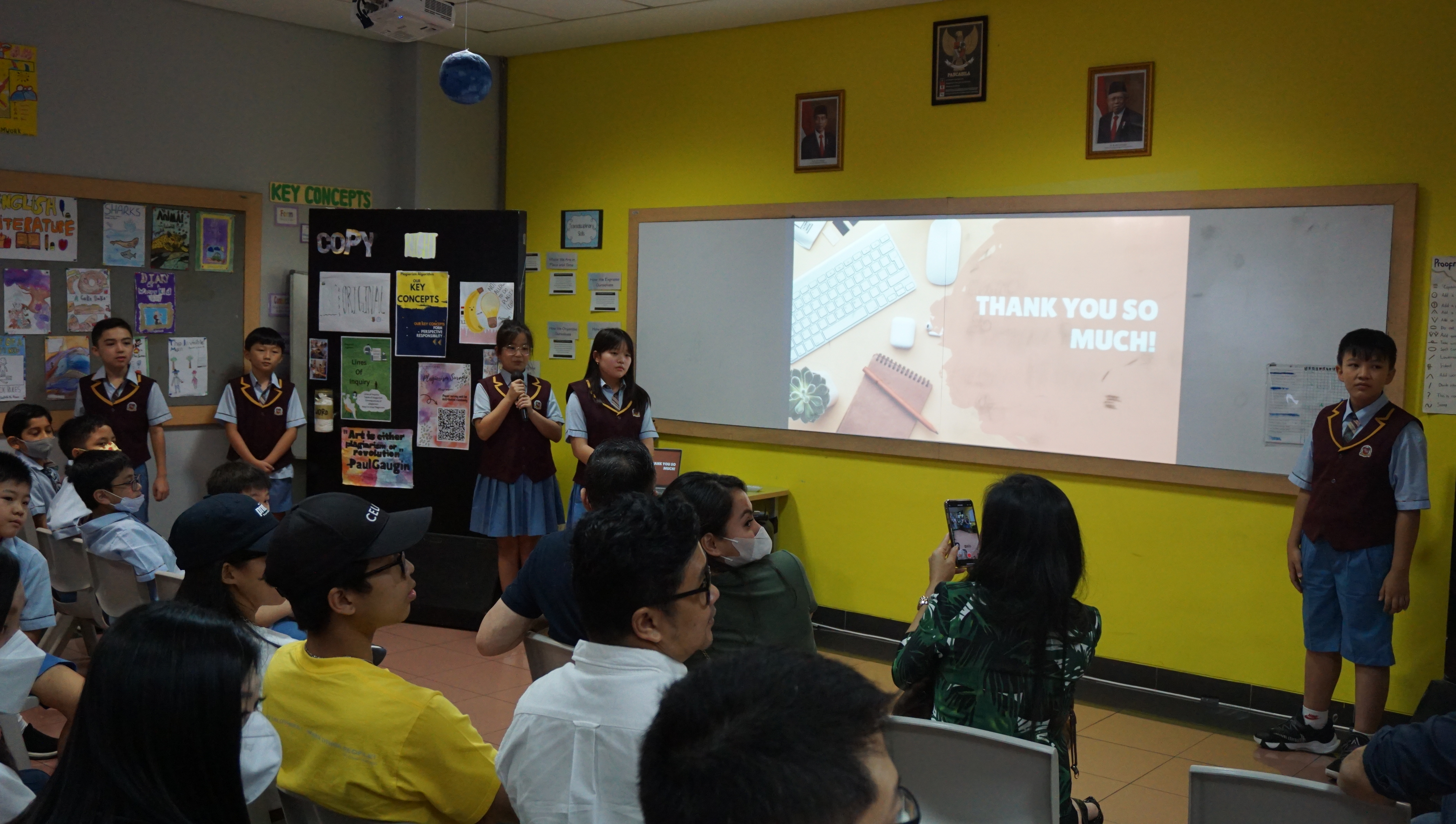
The final phase was the presentation time! The students shared to the whole school community what they found out! Hooray! It kicked off with a celebration where they showcased their role plays, singing, and dance performances in front of an audience. Guests from other schools were invited, as well as parents of the students. The students demonstrated their pride in their achievements throughout the entire PYP exhibition journey, from start to finish. The performances they presented were themed according to the relevant unit of inquiry which was, ‘How we express ourselves.’ We collaborated with several subject teachers to ensure that the performances aligned with the transdisciplinary theme. After they completed their performances, we proceeded with the student presentations. The students took great pride in their accomplishments, and there was a palpable sense of relief after they finished their presentations in front of the audience.
Thursday, August 24, 2023 – BINUS SCHOOL Simprug By: Indira Wirasatria and Geertruida Maya
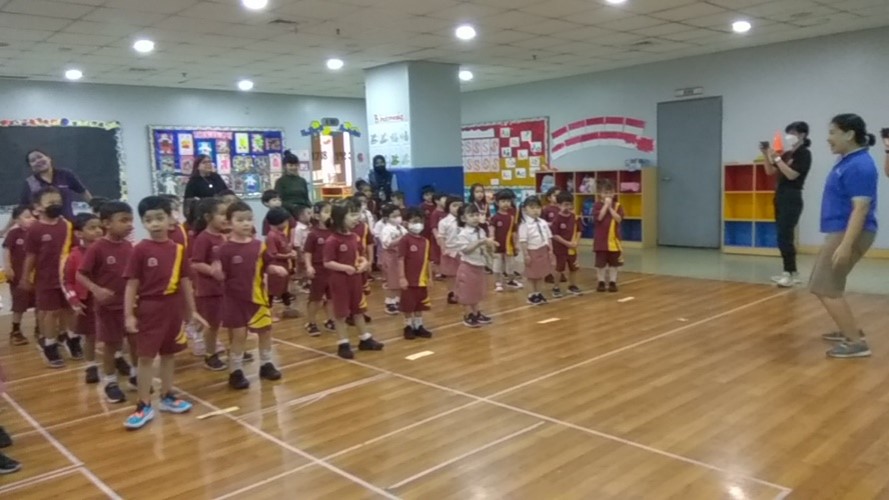
This academic year, Early Years teachers have agreed to have a mini-assembly every month. All EY students aged 3- to 5-year-old meet up in the Basement 1 mirror area. Some of the purposes of the mini-assembly are:
1. To make the students meet and greet other EY children from different grade levels. 2. To maintain the students’ well-being by doing exercises, games, and other learning engagements in a fun way. 3. To build the students’ skills and learner profile attributes. 4. To introduce and show the Binusian “SPIRIT” values.
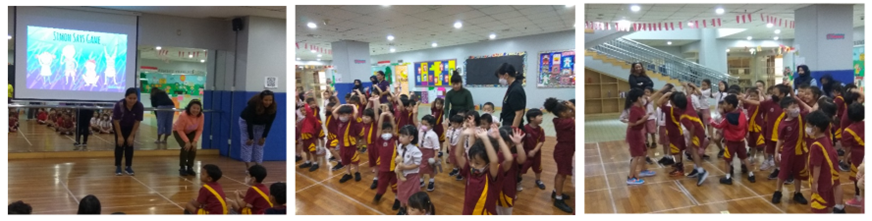
During the first mini-assembly, the students could practice singing the Binus School of Education song and follow simple instructions from the video while doing the exercise. By doing these two activities, the students practice their listening and self-management skills.
After the exercise, the students played the “Simon Says” game. The teacher gave instructions to make the students aware of their body parts. The teacher gave them some tricky instructions to make it more fun and challenging.
At the end of the assembly, the students did the traffic light reflection. Most students chose the green light, meaning they were having fun. They were also looking forward to joining the next assembly.
Assembly can sometimes be simple as long as the students can develop their skills and have fun doing it.
On August 10, 2023, Grade 1 students of BINUS SCHOOL Simprug began a special journey – not to any historical monument or a nature park, but to The Belleza Mall. It was no ordinary shopping spree, but it was an educational field trip designed to deepen their understanding of public places and their significance.
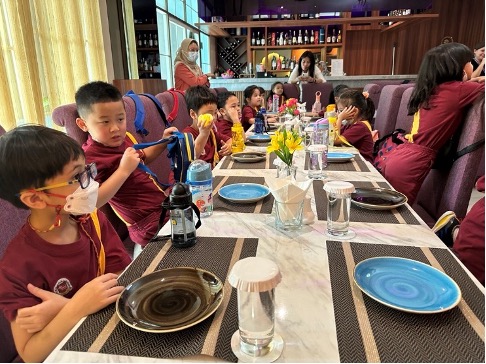
The day started bright and early, with students eagerly boarding the school bus, their faces brimming with excitement and anticipation. As they arrived at the mall at 9 AM, they were warmly welcomed by Reyan’s Mom, one of grade 1B parents and the proud owner of the Indian Flame Restaurant. In true Indian hospitality, the students were treated to scrumptious snacks like potato fries and cheese balls. Not only did these young learners relish the delicious treats, but they also gained insights into how a restaurant operates and its role as a public place.
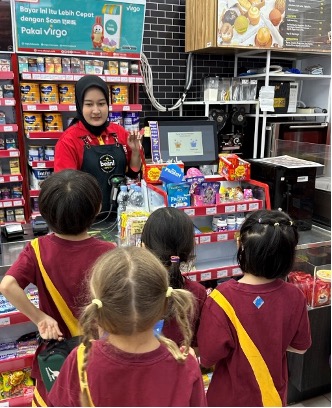
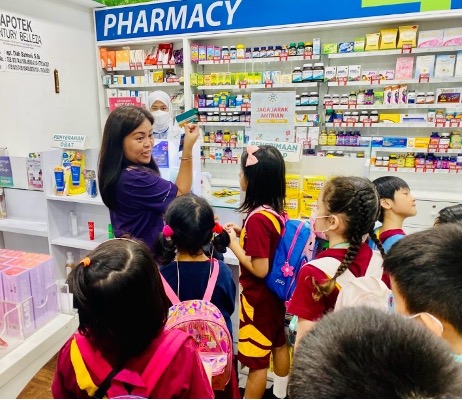
After the delightful snack session, the real exploration began. The students were divided into three groups, ensuring a more personalized and interactive experience. Each group, accompanied by their teachers, visited various public places. At each stop, the teachers explained the nature of the public place, its function, and the roles of the people working there. For instance, while at the bank, students learned about bankers, tellers, and security personnel roles. From the beeping machines of the ATMs and the busy counters of the banks to the stocked shelves of the convenience stores, the students witnessed the buzzing activity of everyday life. They even got the opportunity to handle money and make purchases, not only at convenience stores but also at pharmacies, emphasizing the importance of financial transactions in daily life.
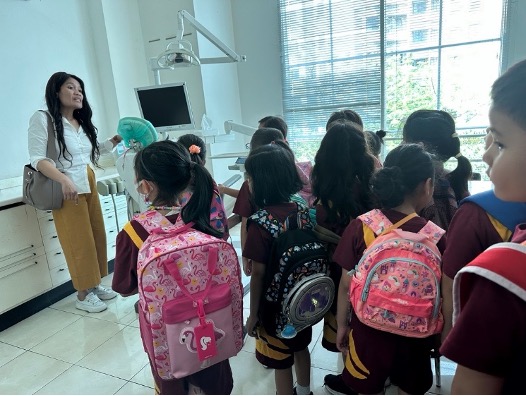
Their journey didn’t stop there. They also explored a dentist’s office, learning about dental hygiene and the role of dentists in maintaining public health. The toy stores were a hit, as one would expect, stirring excitement and curiosity amongst young minds. And who could forget the delightful aroma of freshly baked pizzas from Domino Pizza, where they learned about chefs, waitresses, and the restaurant business?
This hands-on experience was more than just a fun day out. It was an immersive lesson on the importance of public places in our communities. The students returned not just with memories of a delightful day but with a profound understanding of the functions of these places, the people behind them, and the importance of maintaining them for the benefit of everyone.
Such trips underscore the value of experiential learning. While textbooks and classroom lessons are undeniably essential, these real-world experiences truly cement knowledge in young minds. The students of BINUS SCHOOL Simprug are fortunate to have had this opportunity, and no doubt, they will look at public places with new eyes and a deepened respect.
Steve Jobs once said, “innovation is the ability to see change as an opportunity – not a threat”. Roy T. Bennett also said, “respect other people’s feelings. It might mean nothing to you, but it could mean everything to them.” Innovation and respect are in our BINUSIAN Values, “SPIRIT”.
We all needed the BINUSIAN SPIRIT by our side during the PYP exhibition. This experience helped us learn about what will happen in the future. It helped us build our strengths. Each team showed the BINUSIAN Spirit in the team. It was very challenging for all of us, we all had to be the expert on the topic. Some of us had to sleep late or spend most of our time studying. It was an amazing opportunity to show people what we can do! I would say what my group had the most was innovation and respect. Now, let us explore more in the PYP exhibition and further in broadcast media!
My group and I decided to choose our topic as broadcast media as it is a wide area to cover. Our issue is that some broadcast channels overstate news, and some news is not appropriate for kids. An example of overstating news is Fox News. Fox News sometimes overstates their news to make it more entertaining. For our PYP exhibition, my group had four lines of inquiry, starting with “usage of broadcast media”. Broadcast media includes television and radio. The major purpose of broadcasting media is to communicate with the people. It lets the people know about everything that happens around the world, as well as it is used for entertainment. The broadcasting media gives major information, such as speeches, documentaries, interviews, advertisements, daily news, financial markets, and much more.
Our second line of inquiry was “ways broadcast media sends information”. It starts from the news gathering, sending it to the data files, then to the media streams, protocol packets, to the tower then to all the receivers. Broadcast media includes electronically and simultaneously sending information involving signals. AM and FM radio bring sound waves -a type of analog signal- to recipients.
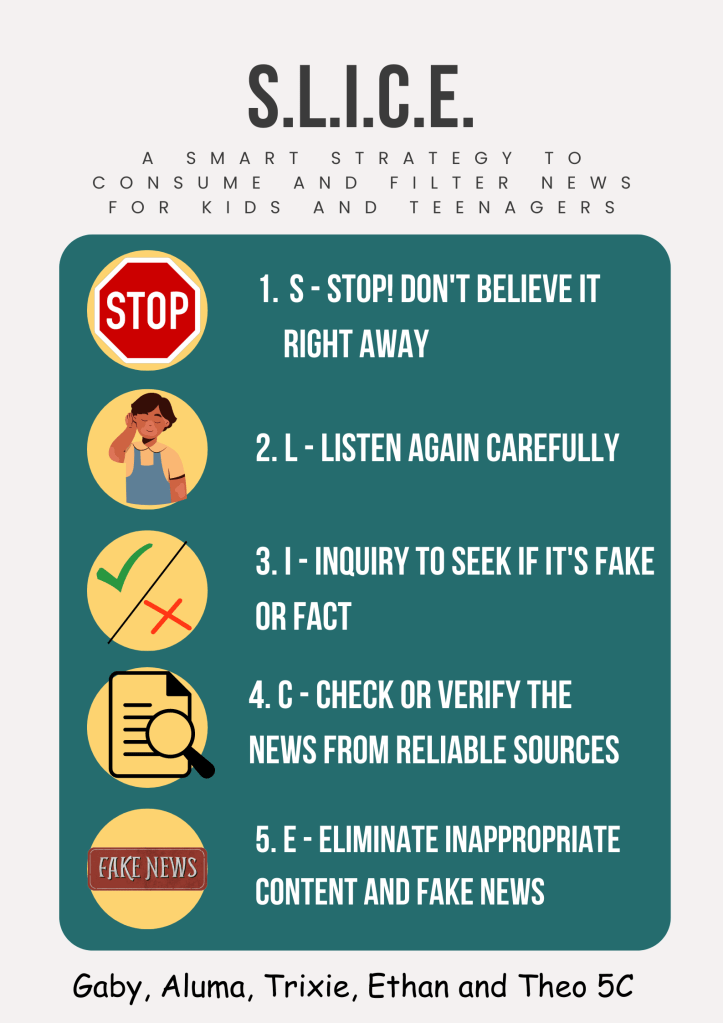
And you may wonder, how do we filter the news? How do we figure out if it’s overstated news? My group and I used I for innovation. We used our creativity with our mentor’s help to create this strategy called “S.L.I.C.E.” This strategy stands for:
S – Stop! Don’t believe it right away.
L – Listen again carefully.
I – Inquiry to see if it’s a fake or fact.
C – Check or verify the news from reliable sources.
E – Eliminate inappropriate content and fake news.
This strategy not only works for broadcast media but also works for social media.
In my team, I am the group leader, and it was a wonderful opportunity! As the leader, you can have more work and some of the leaders including myself have struggled and were frustrated. But I realized that this was a challenge to take, and an amazing opportunity to learn to be a good leader that relates to the BINUSIAN Spirit. I realized to be a good leader, I have to recognize the strength of each of the members and connect them to be a strong team. Our group and not only mine but all the groups did our best. Every group at a certain time had a problem at least once. To stop and reduce the problem, they would need the BINUSIAN SPIRIT by their side.
My group used both innovation and respect. When my team argued at a certain time, we always learned to forgive and forget. We all had respect for each other, so the team was able to go through all the challenges.
The PYP exhibition was an amazing opportunity for all of us. It was a rollercoaster of emotions. I was able to learn many things about broadcast media and spread awareness about broadcast media, too. As I shared today about broadcast media and our journey in this experience, I truly appreciate the opportunity and the help from our teachers and friends. We, BINUSIANS, went through various experiences or challenges. So, let us stay strong. We can all be a strong people to our family, school, nation, and the world.
Have you ever read about print media? Print media is any communication of news published on paper. Although print media now isn’t as famous as digital media, it is still a very useful source of information. It is also more dependable than digital media as people can instantly share information without being checked if it’s true or not.
In a growing digital world, print media offers advantages to get a break from the screen. Print media is a non-internet news communication, which gives focus without distractions of ads, notifications, or hyperlinks. It also attracts certain age groups and can satisfy local communities.
In print media, you will be able to read news that is reliable considering the fact that there have been many lawsuits on digital media just because people are spreading fake news. If you consider print media slow or old fashioned, this is because it has have to go through many levels of approval like fact checking.
Print media has a lasting impact. Once printed, the news remains secure and reliable over time, unlike digital content, which can be easily altered or lost. Print publications can be treasured, shared, and preserved for future generations, ensuring long-term importance of information.
Social media has problems that print media doesn’t. Social media can disseminate false information easily because anyone can spread a rumor in just a few seconds on purpose or not. Even if it wasn’t on purpose, it shows that social media doesn’t go through the same levels of fact checking as print media. Social media allows bullying, raises privacy concerns as there are scammers and hackers in the digital world, and makes people pay less attention to things.
Print media should remain a part of our daily lives because it has many positive aspects. Print media provides a better reading experience, dependability, accessibility, support for the local economy, and a break from digital media. Even while digital media offers advantages, it cannot replace print media’s unique traits. So, let’s embrace print media and keep promoting the original material for communication.




 The Binusian